Chiropractic Services
We provide a wide range of chiropractic services to relieve pain, improve mobility, and support lasting wellness. Each treatment is personalized to your needs. Our goal is to help you achieve better health and live more comfortably every day.
Chiropractic Services
We provide a wide range of chiropractic services to relieve pain, improve mobility, and support lasting wellness. Each treatment is personalized to your needs. Our goal is to help you achieve better health and live more comfortably every day.
Services Offered
Understand the different therapies that may be used to treat your condition.
Your care will be personalized to ensure you experience the greatest benefits as quickly as possible.
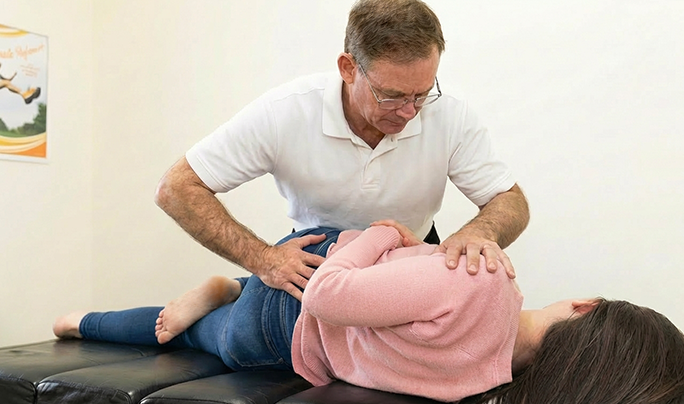
Chiropractic Adjustment
The primary objective of chiropractic medicine is to improve spinal joint function, normalize the body mechanics and help the natural ability of the body to heal.
The primary objective of chiropractic medicine is to improve spinal joint function, normalize the body mechanics and help the natural ability of the body to heal.
Spinal adjustments to correct subluxations are what make doctors of chiropractic unique in comparison with any type of health care professional. The term “adjustment” refers to the specific force chiropractors apply to vertebrae that have abnormal movement patterns or fail to function normally.
- More info
Spinal adjustments to correct subluxations are what make doctors of chiropractic unique in comparison with any type of health care professional. The term “adjustment” refers to the specific force chiropractors apply to vertebrae that have abnormal movement patterns or fail to function normally.
- More info
The objective of the chiropractic adjustment is to reduce the subluxation, which when corrected results in an increased range of motion, reduced nerve irritability, reduced muscle spasm, reduced pain and improved function. The chiropractic adjustment often involves a gentle, quick and shallow thrusting motion applied to the vertebrae for the purpose of correcting movement and function.
Adjustments are often accompanied by an audible release of gas in the spinal joints that can sound like a “crack”. The sound can sometimes be surprising to hear the first time someone gets an adjustment, but the sensation is usually relieving. There are techniques that can be used to restore joint function that will not cause the “click, pop, or crack”, in the event these noises are something the patient does not like.
Occasionally, the treatment is more than a person’s body can handle at the time of care. Minor discomfort may be experienced following an adjustment because areas of the body that have been stuck and not functioning normally, are being stretched and movement is being restored. The doctor uses his or her experience to tailor treatment to each patient but in the unlikely event any discomfort is felt, let the doctor know and the treatment can be more gentle next time avoiding future discomfort. Always share your experience with each treatment with the chiropractor.
Trigger Point Therapy
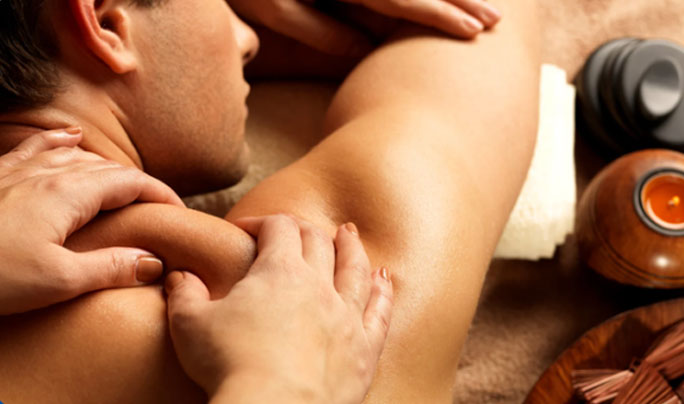
It’s super simple, but it works. A trigger point is like a muscle knot that just won’t quit. They form when part of your muscle stays tight for too long, cutting off blood flow and building up waste. That’s what causes the pain.
The term “trigger point” was coined in 1942 by Dr. Janet Travell to describe a patch or smaller area of tightly contracted muscle fibers, that resided within a muscle. It is described essentially as an isolated region of spasm affecting just a small patch of a muscle. The trigger point is an area of injury that in many cases does not self resolve which highlights it role in chronic pain..
- More info
With trigger point therapy, we apply pressure to that spot until it “lets go.” It’s not scary. No shots. No machines. Just smart hands, the right pressure, and a little time. Most people say it feels like a “hurts-so-good” kind of relief.
- More info
These knotted areas affect muscle function and play a role in affecting normal body and spine joint function. By addressing both joint function and mechanics with the adjustment and working on muscle flexibility and function with deep tissue trigger point work we often find the fastest combination to stop the stiffness, soreness, ache and pain associated by imbalance.
Ice & Heat Therapy
Ice/Cold Therapy
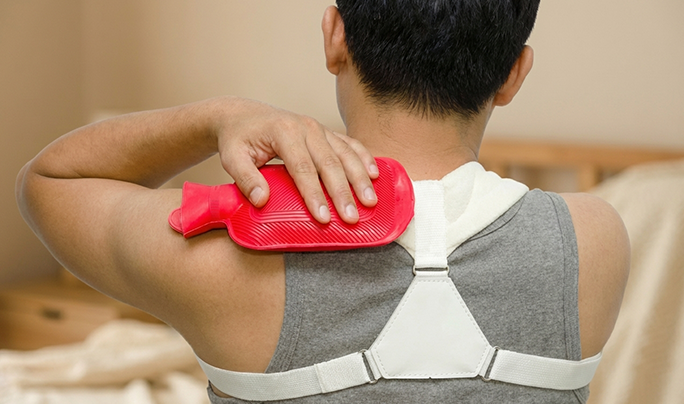
Ice and heat therapy are effective treatments to manage pain, reduce inflammation, and support healing. Ice therapy is best right after an injury to control swelling and numb pain, while heat therapy improves circulation, relaxes tight muscles, and eases stiffness for long-term recovery. Used individually or together, these therapies promote faster healing and better comfort.
Used in the first day after injury to control pain and tissue swelling.
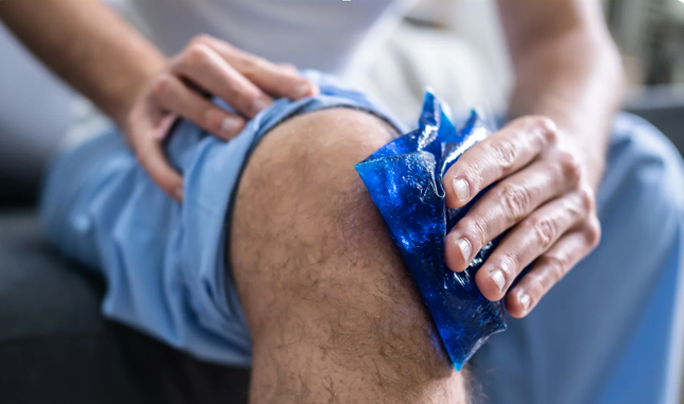
Ice or cold therapy is used to treat many kinds of injuries to different parts of the body. It is the tool generally used in the first moments after an injury up until the end of the first day.
- More info
Ice is used as it causes the blood vessels in the area of use to constrict. This constriction reduces the flow of blood while acting as a kind of anesthetic to numb nerves in the area pain. In the first day after an injury cold therapy will help to reduce inflammation in the area of irritation, and will work to control swelling and reduce pain.
Ice and Heat can also be used in an alternating pattern to result in a greater tissue flush which can be used to help with healing.
Heat Therapy
Used to treat muscle discomfort after the first day and until injury resolution to reduce muscle spasm and increase blood flow to help healing.
Heat therapy works by relaxing muscle groups and causing blood vessels in the area of use to dilate or open thus causing an increase in blood flow to the site of the injury to promote healing.
- More info
Heat is generally applied after the first twenty four hours following an injury and used in the treatment of chronic conditions. It also helps to relax muscles before or after a chiropractic adjustment. Heat increases the ability of muscles to flex and stretch, thereby reducing stiffness.
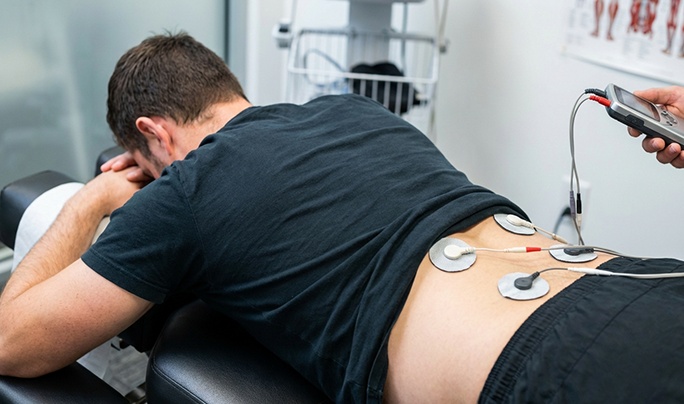
Electrotherapy
Electrotherapy/Interferential current is usually involved in the early treatment stages, especially right after an injury. Ice and/or heat might be used in combination with this tool. This modality works to break muscle spasm and control pain. The mechanism behind its benefit works through a process called the “gate theory” of pain control.
Tool used prior to the adjustment to decrease muscle spasm and pain.
Electrotherapy/Interferential current is usually involved in the early treatment stages, especially right after an injury. Ice and/or heat might be used in combination with this tool.
- More info
This modality works to break muscle spasm and control pain. The mechanism behind its benefit works through a process called the “gate theory” of pain control. The benefit of blocking pain is twofold; as the pain signal decreases to your brain you will feel better, and this will result in a reflexive decrease in muscle tightness and spasm. Interferential current also stimulates the release of your body’s natural pain controlling substances called endorphins and/or enkaphlons.
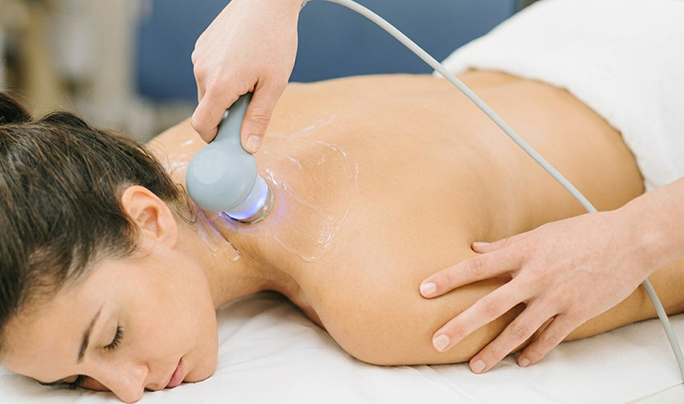
Therapeutic Ultrasound
A tool, used prior to the adjustment, which produces a deep heat and relaxes the muscles.
This modality works to decrease muscle tightness and improve circulation.
- More info
The mechanism works in the following process: the ultrasound head, in a continuous setting, creates sound waves, which penetrate the body, slowing as they pass through various layers of fat, muscle, and stopping at bone. Heat is produced as the sound waves slow and stop, promoting increased blood circulation and causing muscle relaxation in the treated area.
This modality works to decrease muscle tightness and improve circulation. The mechanism works in the following process: the ultrasound head, in a continuous setting, creates sound waves, which penetrate the body, slowing as they pass through various layers of fat, muscle, and stopping at bone. Heat is produced as the sound waves slow and stop, promoting increased blood circulation and causing muscle relaxation in the treated area.
Stretching & Strengthening
Stretching and strengthening are key to keeping your body flexible, balanced, and pain-free. Stretching improves circulation and range of motion, while strengthening builds stability and posture to help prevent injury. Together, they support faster recovery, long-term wellness, and better performance in daily life.

Stretching
The most obvious and established benefit of stretching is to help with flexibility and range of motion.
Stretching also increases blood flow to muscles which helps with healing. During active care this described benefit will help shorten recovery time and after discharge from active care a routine of less frequent but regular stretching will help prevent reoccurrence or new injury.
Put simply when your body moves and works normally it functions better and can better deal with the stresses of daily living.
- More info
Tips for stretching:
Don’t bounce. Stretch in a smooth movement, without bouncing. Bouncing as you stretch can cause injury to your muscle.
Hold your stretch. Hold each stretch for about 30 seconds; in problem areas, you may need to hold for around 60 seconds. Breathe normally as you stretch.
Don’t aim for pain. Expect to feel tension while you’re stretching, not pain. If it hurts, you’ve pushed too far. Back off to the point where you don’t feel any pain, then hold the stretch.
Make stretches sport specific. Some evidence suggests that it’s helpful to do stretches tailored for your sport or activity. If you play soccer, for instance, you’re more vulnerable to hamstring strains. So opt for stretches that help your hamstrings.
Keep up with your stretching. Stretching can be time-consuming. But you can achieve the most benefits by stretching regularly, at least two to three times a week.
If you don’t stretch regularly, you risk losing any benefits that stretching offered. For instance, if stretching helped you increase your range of motion, and you stop stretching, your range of motion may decrease again.
Strengthening
Strengthening exercises can be used to improve your muscles’ ability and endurance. Exercise and physical activity deliver oxygen and nutrients to your tissues helping your health and healing.
- More info
Building endurance and training muscle balance are great ways to prevent injury. Many of today’s complaints of back, neck, shoulder, or discomfort in other areas are related to imbalance and weakness in the postural muscles of the neck, low back, and core.
Our treatment plan initially incorporates stretches to promote pain-free range of motion. As pain stops in the second phase of care, stabilization exercises are started to promote good posture and balance to prevent re-injury.